GuideInventory delays6 min read

How to spot inventory delays before they become pickup problems

Tie shortage signals to expected refill demand so patients hear about delays before they walk in.

Operational guidance only. Refillops does not make clinical, coverage, or dispensing decisions.

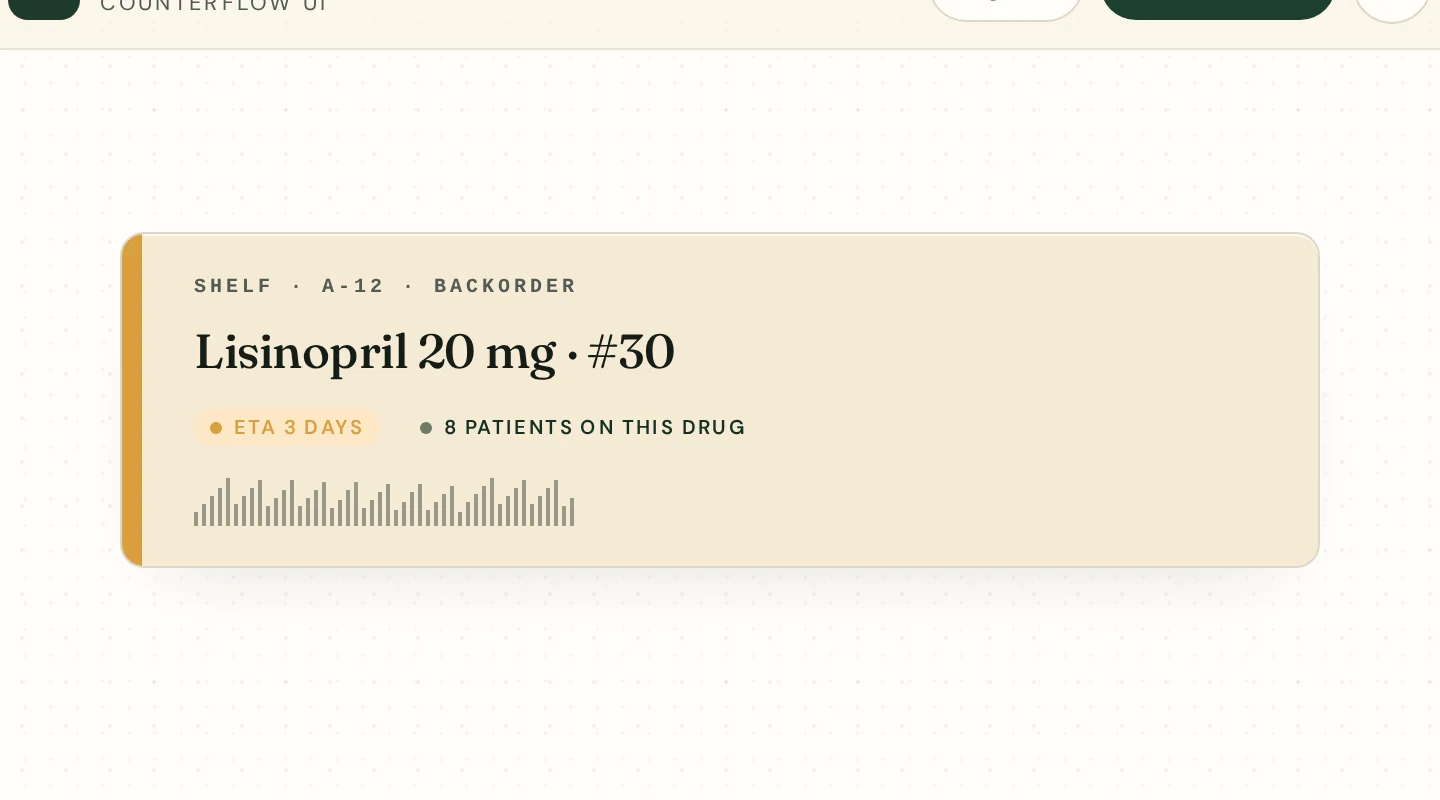
Inventory shelf tag showing a backordered medication
Trust note · Workflow guidance only. Pharmacy teams stay responsible for patient care and clinical review.

Section 01

Expected refill demand

The week's expected refill demand is sitting in your queue already — patients on therapy, due dates, and last-fill quantities.

  • Roll up expected refills by drug for the next 7–14 days.
  • Flag drugs where projected demand is above current on-hand.
  • Re-run the view at least daily.

Section 02

Low stock markers

Use clear shelf markers so the floor sees the same thing the queue sees.

  • Backorder — supplier delay, no fixed ETA.
  • Short supply — limited stock, ration carefully.
  • Available — normal fill posture.

Section 03

Patient impact

When supply is tight, the patient experience depends on what they hear and when.

  • Reach out before the patient calls or walks in.
  • Offer a realistic pickup window, not best-case timing.
  • Be explicit if a partial fill may be needed.

Section 04

Partial fill review

Partial fills are an operations decision with pharmacist oversight.

Section 05

Prescriber alternative request boundaries

If an alternate may be appropriate, route the conversation correctly.

  • Draft a clarification message to the prescriber.
  • Do not propose specific therapy changes in patient-facing messages.
  • Wait for prescriber response before changing the prescription.

Section 06

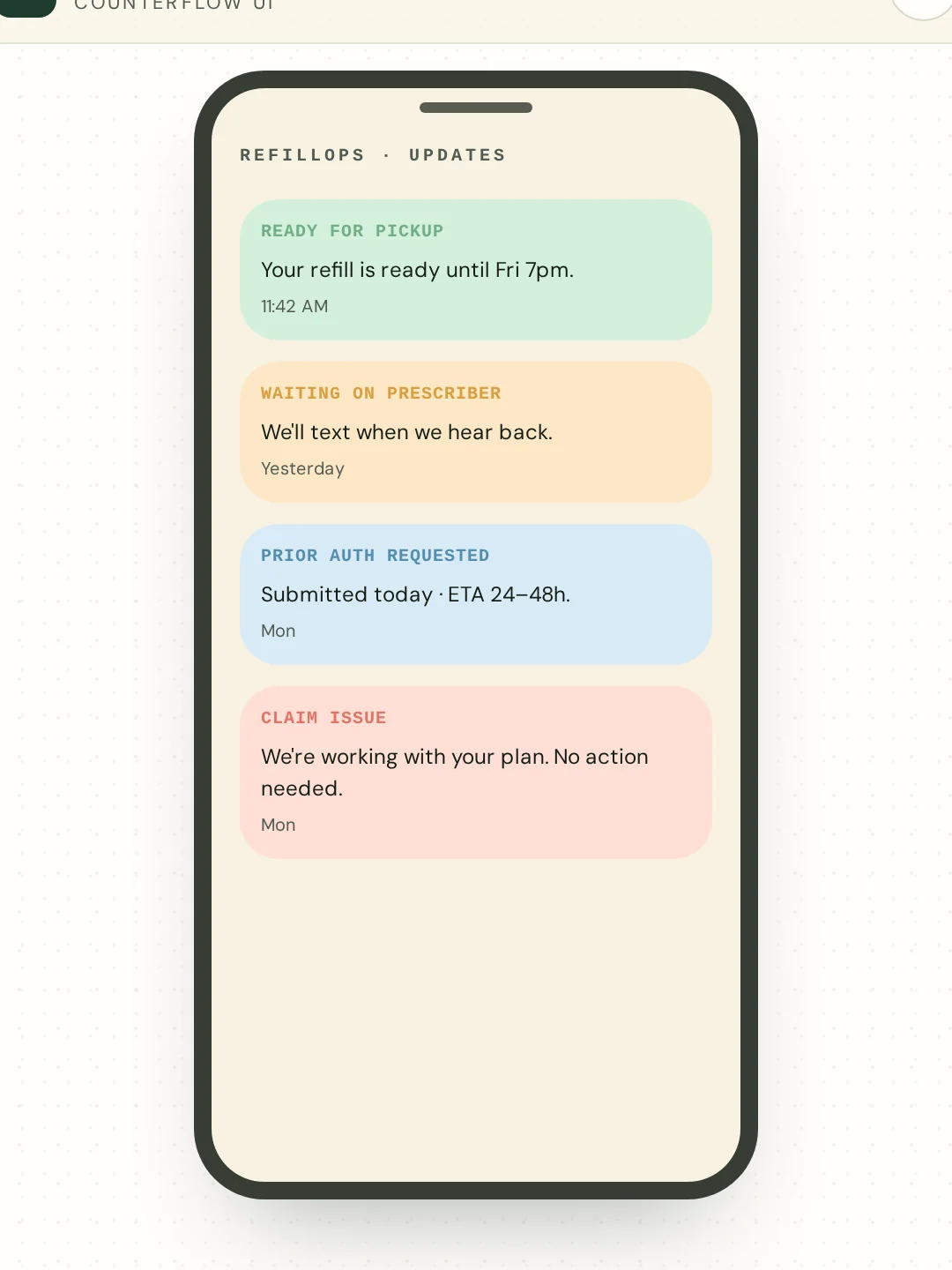
Patient update examples

Inventory delay
"We're seeing a short supply on your refill this week. We'll text you as soon as it's ready, likely by Thursday."

Related

Keep reading.

Want this running in your pharmacy?

See how Refillops turns this guidance into a live, owned workflow your team can run every shift.